- Security
- Privacy
- Performance
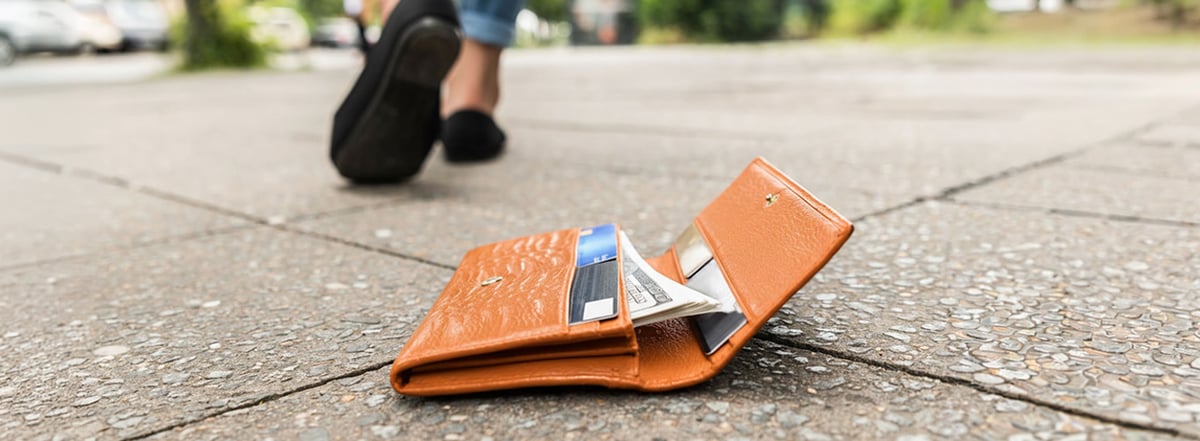
Well, you’ve lost your wallet… now what? No need to panic! It’s still possible to protect your personal information by acting quickly. We’ll walk you through the steps to take if you lose your wallet, then show you how Avast Secure Identity can provide peace of mind by providing 1:1 assistance if your identity is stolen as a result of a lost wallet.



This Article Contains
This Article Contains
Immediate steps to take after losing your wallet
Once you realize you’ve lost your wallet, the clock is ticking. If you can retrace your steps and look for it, do so. If you can’t, it’s best to lock your cards immediately and file a police report.
 Retrace your steps and search smartly
Start by thinking through the last place you had your wallet. Did you open it to pay for something? Could it have fallen out of your pocket or bag in a public place? If you think you may have left it in a shop, call to see if they’ve found anything.
Next, search through your recent transaction history in your banking app or on your credit card statements. Doing this can give you clues on where you used your card last.
If you can’t remember where you last had it, can’t retrace your steps because you were traveling, or notice unauthorized transactions on your banking app, there’s a chance your wallet may have been stolen instead of lost. In that case, it’s safest to lock your cards immediately. Dispute or report any charges you don’t recognize and move on to the next step.
 Lock or cancel cards immediately
By locking your cards, you’ll ensure that no one can use them to buy anything (anything else, anyway). Remember, this is a temporary step — should you recover your wallet and find that your cards haven’t been misused, you can unlock your cards again or quickly replace them with your bank or credit card company.
Both large and small banks typically allow you to lock and unlock your cards via the mobile app. Though each bank has a different process, you typically need to sign in to the relevant banking app, navigate to the Settings menu or Card menu, then lock the card(s). From here, you can also cancel your card completely and order a replacement, which might be a better option if you don’t expect to recover your wallet anytime soon (or ever).

 File a police report
A police report can help you in two ways. First, it could lead to your stolen wallet being recovered if police manage to identify and catch the criminals. Second, filing a police report creates a formal record of the incident that will be helpful if you need to replace your documents, or if your data was breached as a result of the theft.
For instance, if you suspect identity theft as a result of your wallet being stolen, a police report will serve as the basis of your case and help you request an extended fraud alert, which lasts for seven years. Similarly, if you need a new ID, the issuing authorities may request a police report as a means to verify that you’ve actually lost your original document.
The police report should contain your information, a description of the wallet, its contents, and its last location. If you do find unauthorized transactions or any other suspicious activity on your account, make sure to mention that as well.
How to protect your identity after losing a wallet
While no one wants to lose cash, the risk of identity theft after losing your wallet is a far more serious matter. Wallets contain IDs and bank cards that could expose your address, card numbers, and potentially your Social Security number to criminals. These credentials may be sold on the dark web or used for any variety of attacks, including more targeted phishing or social engineering schemes
To help prevent identity theft after losing your wallet, follow these tips:
-
Update your passwords: Change your login credentials at your banks, creating unique, strong passwords for each account and enabling two-factor authentication (2FA) wherever possible.
-
Report your ID as lost or stolen: Doing this will flag your original ID as invalid in the relevant official systems. While this won’t be 100% effective in invalidating your original ID, especially if the thief relies only on an authority’s visual inspection, it can help render the ID useless when the official systems are queried.
-
Place a fraud alert with the credit bureaus: If your Social Security number and credit cards were lost, it also may be a good idea to place a fraud alert, which warns credit lenders to take extra identity verification steps before granting new credit accounts in your name.
-
Report identity theft: In some extreme cases, losing your wallet could turn into full-on identity theft. Contact the FTC immediately if you suspect your identity has been stolen, or if you know your SSN was in your wallet. The FTC will handle the identity theft report and present next steps.
-
Invest in identity monitoring: To monitor for leaked personal information, use Avast Secure Identity, which monitors the dark web for stolen credentials and provides up to $1 million reimbursement in the case of financial fraud as a result of identity theft.

Replacing important documents and cards
If you’re absolutely certain that your wallet is lost, especially after you retrace your steps and lock your cards as a precaution, it’s time to replace the documents you had — here’s how to replace common documents:
-
Driver’s license: Contact your local Department of Motor Vehicles (or equivalent agency) and schedule an appointment to replace your card.
-
Health insurance card: Call your insurer right away and tell them you’ve lost your wallet. Request a digital card for immediate use.
-
Social Security card: It’s not recommended to carry your Social Security card in your wallet in the first place, but if you lost it or suspect that it was stolen, call the Social Security Administration to notify them immediately. In some cases, you may not need a replacement card as long as you still know your number.
-
Debit and credit cards: Each bank has its own processes. Sometimes, you can cancel and replace your card on the mobile app, but other banks might need you to call them or go to a branch in person. When in doubt, it’s best to call them.
Preventing future info loss
The only thing worse than losing your wallet is losing it twice. To reduce the chances of losing your wallet and important documents again, consider the following strategies:
-
Use slim wallets or digital wallets.
-
Carry only the essentials, like health insurance cards, Driver’s license, and emergency cash.
-
Keep a photo or digital record of your bank cards.
-
Add a Bluetooth or GPS tracker to your wallet.
-
Keep your car insurance info in your car, not your wallet.
-
Put your Social Security card in a fireproof safe at home and memorize the number in case you need it on the go.
-
If you’re traveling, use a decoy wallet or get a money belt to securely carry your important information close to your body.
Protect your identity with Avast Secure Identity
If you lose your wallet, you’re at greater risk of financial identity theft, or worse. With Avast Secure Identity, your personal data will be monitored no matter where your wallet is. Use it to get alerts if your personal information is used without your knowledge, and build in some peace of mind with 24/7 specialist assistance that can help you recover.
What customers say

More Privacy Articles
Reclaim Your Personal Data with Avast Privacy Control

Stay Ahead of Identity Threats with Avast Secure Identity
How to Prevent Elder Financial Abuse
What to do if you lose your wallet

How Do I Place a Credit Fraud Alert?

Data Brokers: Everything You Need to Know

What Is a CVV Number and How Do I Find It?
What to Do If Someone Has Your Social Security Number

How to Contact Credit Bureaus

What to Do If You Lose Your Phone With the Google Authenticator App on It

Home Title Theft – What You Need to Know

How to Report Identity Theft
Identity Protection
Privacy
Adam De Gree
13-02-2026