- Security
- Privacy
- Performance
Etsy is a popular online marketplace for unique, vintage, and handcrafted items — but is it a safe place to shop? Etsy itself is a legitimate platform with secure payment processing and buyer protections. However, because the site functions as a marketplace of independent sellers, the quality of products and customer service can vary widely. Keep reading to learn how Etsy works, the most common scams to watch for, and how to stay safer while shopping.






This Article Contains
This Article Contains
Is Etsy a legit website?
Etsy is a legitimate online marketplace that connects buyers with independent sellers offering handmade, vintage, and unique goods. While the platform itself is well-established and widely used, with 96 million active buyers, Etsy does not manufacture, store, or ship products directly. Instead, individual sellers are responsible for product listings, order fulfillment, shipping, and customer service.
Because Etsy operates as a marketplace rather than a traditional retailer, the safety and quality of each transaction depend largely on the reliability of the specific seller you choose. While many Etsy shops are trustworthy and provide excellent products and service, others may be less reliable. Understanding how the platform works — and knowing how to evaluate sellers carefully — can help you shop more confidently and reduce the risk of scams or disappointing purchases.
Is it safe to buy from Etsy?
Etsy is generally considered safe to use thanks to its secure payment system — which uses Transport Layer Security (TLS) to protect your data — and robust buyer protection policies. The platform uses encrypted payment processing and offers support through Etsy Purchase Protection for eligible orders.
However, since Etsy is a marketplace made up of independent sellers, there is still some risk involved. Buyers may occasionally encounter scams, counterfeit products, misleading listings, delayed shipping, or items that do not match their descriptions.
Etsy helps reduce these risks through seller reviews, secure checkout, and dispute resolution tools, but these safeguards are not foolproof. Buyers should still research sellers carefully, read customer feedback, review product photos and descriptions closely, and avoid completing transactions outside of Etsy’s platform.
Understanding common scams and learning how to evaluate sellers carefully can help you make safer purchases and shop with greater confidence.
Types of Etsy scams and how to avoid them
Etsy scams can take a variety of forms, and warning signs are not always obvious. Because Etsy is a marketplace of independent sellers, most risks come from dishonest listings, misleading product descriptions, counterfeit goods, fake tracking information, or sellers who fail to deliver orders.
Most Etsy scams follow recognizable patterns, but they are not always easy to identify, especially when listings and seller profiles appear legitimate at first glance. Scammers often rely on convincing product photos, fake reviews, misleading descriptions, or unusually low prices to gain buyers’ trust before problems appear after purchase.
Understanding how these scams work — and where risks typically come from — can help you spot red flags earlier and shop more safely.
1. Fake Etsy shop scams
Some Etsy shops are fake fronts, set up by scammers who list items for sale in the hopes of enticing buyers into purchasing them. However, the “seller” behind these fake shops never intends to deliver the product, and probably doesn’t even have the product to sell.
Instead, they collect payment for incoming orders and then refuse to dispatch the product, ignore the buyer, or even close the shop entirely to make the refund process difficult.
Alternatively, the fraudulent seller might message the buyer to ask for credit card information or personal data, claiming that there’s a problem with the order. If they get access to this sensitive information, they can use it to hack online accounts, make fraudulent purchases, or commit identity theft.
How to protect against fake Etsy shop scams: Before making any purchases on Etsy, check the seller’s reviews to get an idea of their legitimacy. Don’t give away any personal or financial information to sellers, and always keep your transactions and communications on the Etsy platform.
2. Fake or counterfeit products
Fraudulent Etsy shops might try to sell fake products, using misleading images and descriptions to misrepresent low-quality counterfeit items as high-quality designer products. An item advertised as a vintage Louis Vuitton handbag, for example, might be a cheap knock-off that’s only worth a fraction of the listed price.
How to protect against fake product scams on Etsy: Be cautious of designer items on Etsy that are priced way below their market value, as they could be fakes. Check reviews to assess their quality level or use a reverse image search to check if the product listing photos are stolen from elsewhere on the internet.
3. Bait-and-switch scams
A typical bait-and-switch scam involves a seller advertising a product that’s very different from the item the buyer eventually receives. The product listing will typically feature a deceitful description and misleading images, deliberately misrepresenting the product’s materials, size, or quality level.
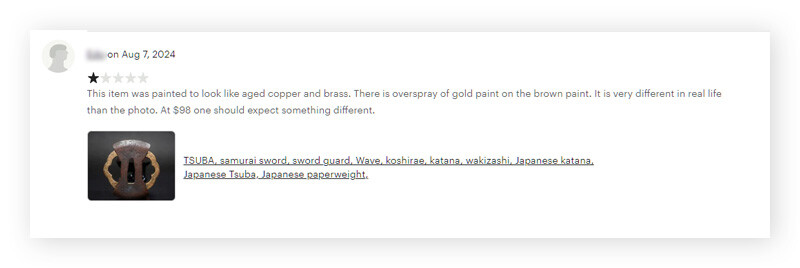
Bait-and-switch scams on Etsy are also sometimes used to portray a cheap, mass-produced product as handmade or unique. A buyer may be made to believe they’re purchasing a custom hand-embroidered blouse, for example, only to receive a generic product that’s available cheaper elsewhere.
How to protect against bait-and-switch scams on Etsy: Pay close attention to product descriptions before buying a product and look out for potentially misleading language. Also, check product reviews and associated images from previous buyers, looking out for complaints of misrepresentation.
4. Wrong address scams
Scammers running a wrong address scheme will purposely deliver products to the wrong address in order to generate “proof” of shipping. The address they choose will often be one they can access to reclaim the product, or one they know the product will be rejected from so it’s returned to them.
When the buyer realizes the product isn’t arriving and raises a claim, the “seller” has proof that the item was delivered, albeit to the wrong address. They try to use this proof in an attempt to avoid giving a refund, leaving the buyer out of pocket.
How to protect against wrong address scams on Etsy: Always double-check order confirmation details after purchasing on Etsy. If the listed address isn’t correct, contact the seller immediately and file a report with Etsy if they don’t respond.
5. Alternate payment scams
Some fraudsters on Etsy encourage buyers to make payment for a purchase off-platform, using Venmo, cryptocurrency, or gift cards, for example. They may even offer a discount to do so. Regardless of what they say, do not pay for goods on Etsy using a payment platform that the company doesn’t approve. Etsy prohibits off-platform payments because they leave buyers unprotected in the event of a scam.
Purchases made using Etsy Payments are covered by the Etsy Purchase Protection program, but this typically only applies when purchases are completed through Etsy’s official payment system. If a seller asks you to pay outside the platform, you may be left with no way to dispute fraudulent transactions or claim refunds.
How to protect against alternate payment scams on Etsy: Always use Etsy’s built-in payment options so your purchase is traceable and covered by the Etsy Purchase Protection program.
6. Varying price scams
Sellers running a varying price scam list the same product multiple times, sometimes even across different platforms like eBay, with each listing having a different price. If a buyer tries to make a purchase from a cheaper listing, the seller might claim the item is out of stock in that particular shop but is available elsewhere.
They’ll then try to lure the buyer to another listing featuring a higher price than the original one, whether that’s on Etsy or another online marketplace.
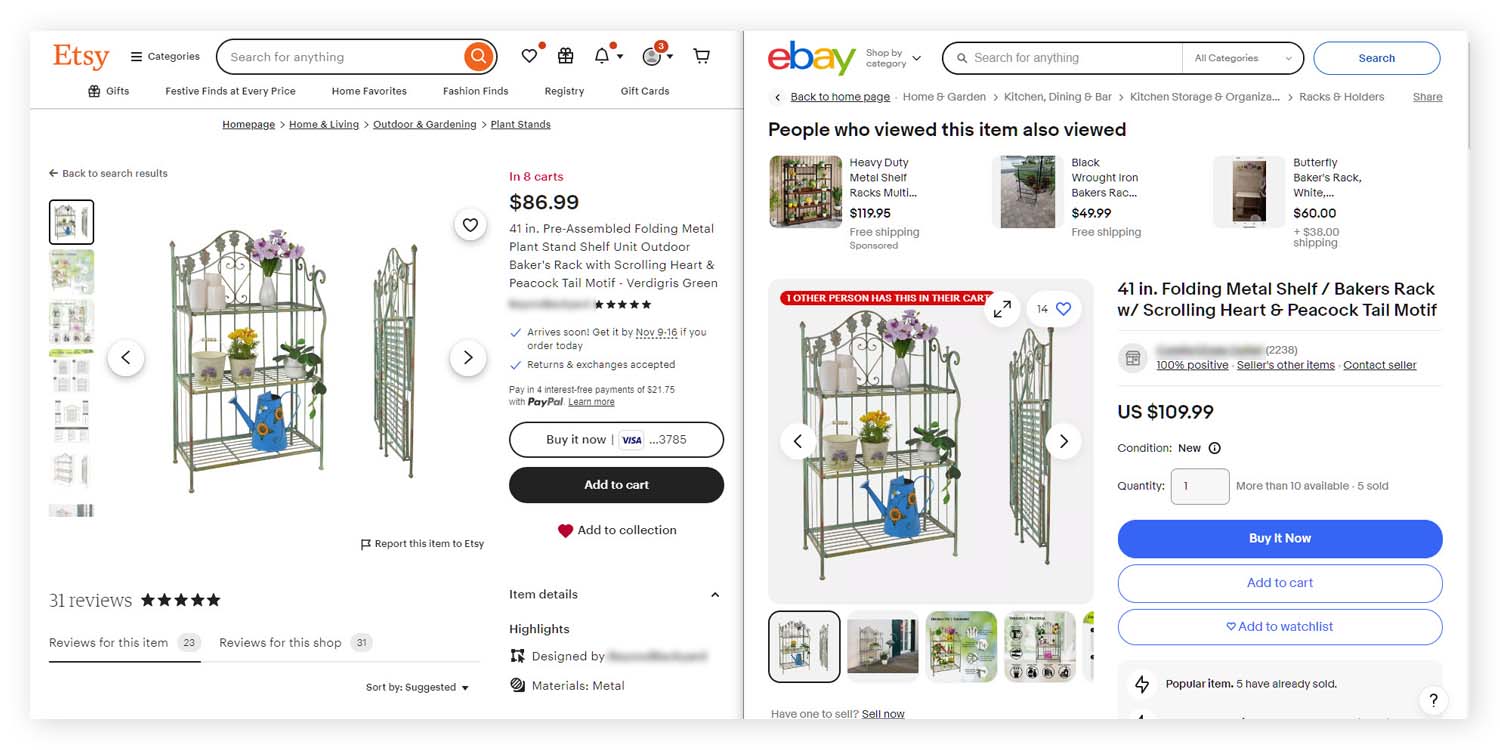
How to protect against varying price scams on Etsy: Exercise caution if a seller tries to get you to purchase an item at a higher price through a secondary listing, especially if they encourage you to purchase through another platform.
7. Malicious website scams
Some Etsy scammers aim to direct buyers toward a malicious website used for pharming, where their browser or device can be infected with malware or their data can be compromised. There are various strategies they use to tempt buyers to leave Etsy, including claiming that a product is available cheaper off-platform.
How to protect against malicious website scams on Etsy: Whatever they promise, never leave Etsy for another website to oblige a seller. For an added layer of protection, make sure you have reliable antivirus software with online safety features installed on your device to help protect against malware and viruses.
8. Phishing or spoofing scams
Etsy sellers and buyers alike can be targeted by phishing or spoofing scams, with cybercriminals using diverse social engineering schemes in an attempt to steal sensitive personal or financial information.
Etsy users might get a message from someone claiming to be an Etsy representative, asking them to follow a link to an external website, provide their login information, or send their bank details.
These requests might be made under the pretense of account verification or scheduled security checks. But users who comply may find themselves exposed, with the scammer able to use the information they provided to get direct access to their personal and financial accounts.
To help protect users from these scams, Etsy labels all messages sent from official representatives with a special “From Etsy” badge under the subject line. Legitimate Etsy messages will also appear in the dedicated From Etsy folder in the messaging hub.
Any messages claiming to be sent from Etsy representatives that don’t meet these criteria are highly likely to be phishing or spoofing attempts.
How to protect against phishing or spoofing scams on Etsy: Always follow best practices with account logins, using a strong password and multi-factor authentication. Be on guard when you receive messages asking you to take immediate action regarding your account, and check for a “From Etsy” badge to ensure you’re speaking to an Etsy representative.
How to spot an Etsy scam
Understanding common scam tactics can help you spot potential risks, but no single sign automatically means a seller is either fraudulent or trustworthy. Instead, it’s important to consider multiple factors together — including reviews, listing quality, pricing, and seller communication — before making a purchase.
New, inactive, or unprofessional profiles
Although it’s not a foolproof method, inspecting an Etsy seller’s profile can help you assess their legitimacy. New, inactive, or unprofessional-looking profiles are all red flags that might indicate the seller is a scammer. In particular, be cautious when dealing with users whose profiles feature:
-
Poor grammar or an unprofessional appearance
-
Suspicious or inconsistent product listings
-
No reviews, or reviews that look suspiciously fake
-
Limited information about the shop or its owner
-
Images that appear to come from other sources
Generally speaking, legitimate sellers will take care to create complete, trustworthy profiles with personalized information about themselves and their business.
Suspicious product descriptions
Pay close attention to the product description before making a purchase to make sure everything adds up. Some sellers will hide suspicious activity by using vague, misleading, or inconsistent language to describe what they’re selling.
Equally, after making an order check the confirmation email, shipping address, and package size carefully to make sure it matches the item you ordered. If anything looks suspect, contact the seller or Etsy support as soon as possible to report it.
“Too good to be true” prices
If you find a product on Etsy that seems suspiciously cheap, cross-check it against similar items listed across other Etsy shops or online marketplaces. If the product listing has a significantly cheaper price than elsewhere, you may be dealing with a scammer.
A price that’s too good to be true could be an indication that the product is a counterfeit, or that the seller is trying to pull off a scam that means you never receive what you buy.
Alternate payment suggestions
Any sellers that ask you to complete a transaction outside of Etsy’s secure payment platform, even if it’s using a supposedly “secure” payment channel, should be avoided. Only payments made on Etsy’s platform are eligible for the Etsy Purchase Protection program.
Taking your transaction off-platform puts you at risk of being scammed out of your money or having your financial details stolen.
Fake images
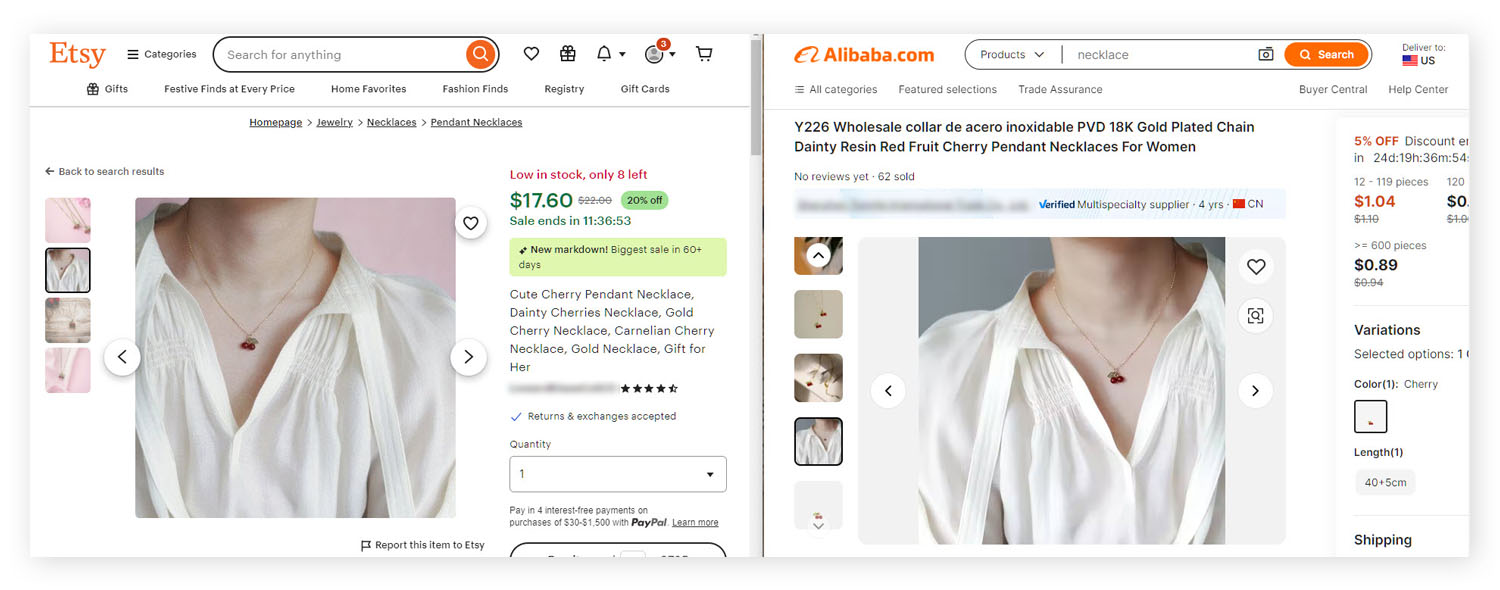
Scammers who use fake or misleading product listings to trick people will often take images from elsewhere on the web to make their product look more legitimate. If you’re ever suspicious about an image used on a product listing, use a reverse image search to check if it originates from elsewhere.
If you find the exact same images on another shop, whether it’s somewhere else on Etsy, another online marketplace, or a first-party retailer’s website, it’s probably a sign you’re not dealing with a reliable Etsy seller.
Use of external links
Always avoid purchasing items from sellers who try to redirect you to an external website, even if you’re tempted by lower prices. Following links in direct messages could lead you to malicious websites where you’re at risk of being exposed to malware or having your personal data stolen.
Scammers using fake links don’t only live on Etsy — they’re all over the web. That’s just one reason why you should download Avast One. It helps block malicious links and websites, and lets you connect more safely to Wi-Fi networks. Download it for free today and go about your Etsy shopping more confidently.
Negative or fake reviews
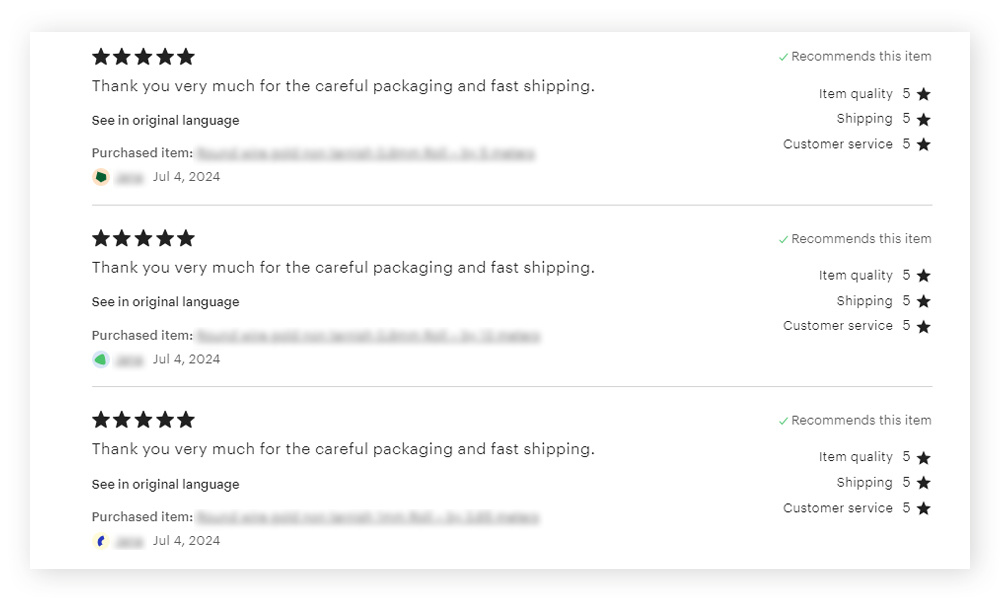
You should always check a seller’s reviews before purchasing from them. Sometimes you’ll find lots of negative reviews warning of untrustworthy activity, which is a clear red flag. However, even shops with lots of good reviews may be inauthentic.
Check if the reviews use repetitive language or were all posted around the same time, both signs that they may be fake. If you’re ever in doubt, it’s generally best to err on the side of caution and find another seller who has a more convincing review profile.
Delayed or defensive responses
Etsy offers a messaging platform you can use to contact sellers directly, before or after making a purchase. You can use this to check up on any concerns you may have about a product listing or a transaction.
Be cautious if the seller takes a long time to reply or avoids questions, as legitimate sellers will usually respond promptly and answer any queries you may have about their policies or products.
Expensive delivery costs
Reliable Etsy sellers will provide you with their shipping costs and delivery timeframes upfront. In some cases, such as for international purchases or custom, made-to-order items, the shipping cost can be higher or delivery time can be longer than usual.
However, high delivery costs or long delivery timeframes can also be signs of a potential scam. For example, if you live in the U.S. and an item is described as being made in and shipped from the U.S. but the delivery information says it’ll take four weeks to arrive, there’s a chance you’re being duped by a misleading product description.
Asking for personal information
Etsy sellers don’t have any reason to request personal information from you directly. When you place an order, Etsy collects all of the necessary details and passes only relevant data on to the seller while protecting sensitive information like your banking or credit card details.
While sellers might have questions specific to the product, especially if they’re selling customizable items, you’ll never have to share information like your contact details or logins. If the seller tries to get sensitive information from you, claiming it’s needed to process the payment or complete the order, you’re likely dealing with a fraudster.
If you're scammed on Etsy, what can you do?
If you’ve fallen for an Etsy scam, there are some actions you can take to try and recover lost funds, protect your personal details, and prevent the scammer from causing further damage.
-
Contact the seller: According to Etsy’s buyer policy, the first step you should take if you have any issues with an order is to contact the seller. If they’re legitimate, they’ll work with you to resolve your problem.
-
Open a case with Etsy: If the seller doesn’t resolve the issue to your satisfaction within 48 hours, you can open a case with Etsy’s support team. Etsy’s Purchase Protection program offers refunds on eligible orders where the item wasn’t delivered or isn’t as described in the listing.
-
File a chargeback: If you’re unable to get your money back with Etsy’s help, you can try to file a chargeback with your bank or credit card company, citing the seller’s fraudulent activity.
-
Update your security: If you’ve shared personal information with another Etsy user, change your password and make sure multi-factor authentication is enabled for any potentially compromised accounts.
-
Freeze your credit: If you suspect your personal or financial data has been compromised, you can freeze your credit with the major credit bureaus to prevent the scammer from opening new lines of credit in your name.
-
Monitor your statements: Keep a close eye on your financial statements in the weeks or months following the incident. If you notice any suspicious or unauthorized activity, report it to your bank or credit provider immediately.
-
Report the scam: Report the scam to the Federal Trade Commission (FTC) and Internet Crime Complaint Center (IC3).
Even with the help of Etsy’s support processes and buyer protections, recovering lost funds is not always guaranteed. That’s why taking preventive steps and evaluating sellers carefully before making a purchase remains important.
Will Etsy refund my money if I am scammed?
Etsy’s Purchase Protection program gives buyers the right to claim a refund in case of “non-delivery, late delivery, damage, or if an item you receive is not as described in the listing.” A refund is not guaranteed in all cases, but Etsy will evaluate claims on a case-by-case basis, mediate disputes, and make a decision. If they decide in favor of the buyer, Etsy will usually refund the total amount for the item and shipping cost.
Be sure to review all details before purchasing on Etsy, as some orders may not qualify for refunds or Purchase Protection. For example, protections may not apply to payments made outside Etsy, certain custom or personalized items, or products that have been used, altered, or otherwise fail to meet eligibility requirements.
Protect your personal information with Avast
Keeping your personal data safe is paramount when making online purchases on platforms like Etsy. That includes protecting yourself against the risk of your device, and all of the information it contains, being compromised.
Avast One provides comprehensive device security, including award-winning antivirus software security, Wi-Fi network protection, and a wide range of security and privacy tools to help keep you safer online.
FAQs
Can you use a credit card on Etsy?
Etsy offers diverse payment options including using credit or debit cards. Most major credit cards are accepted, including Visa, Mastercard, and American Express. Buyers can also choose to pay via PayPal, Apple Pay, and Google Pay.
Is it safe to give Etsy your Social Security number?
Etsy requires sellers to share their tax information for legal purposes, which for U.S.-based sellers includes providing a Social Security number. However, you will only be required to enter your SSN when you’re setting up a seller account, and Etsy will never ask you to send it in a message. Buyers will never have to provide their Social Security number to Etsy, nor to an Etsy seller.
What are the cons of buying on Etsy?
While Etsy offers access to unique and handmade products, there are some risks to consider. Because sellers operate independently, product quality, shipping times, and customer service can vary. Some listings may be misleading, and mass-produced items are sometimes falsely marketed as handmade. Although scams are not common, reviewing seller ratings, reviews, and product details carefully can help reduce potential risks.
What customers say

More Security Articles

The AI Confidence Trap: Most People Think They Can Spot AI Content. Scams Are Still Getting Through

How To Work With Your Grandparents To Keep Them Safe From Scams

Grindr Scams: How to Spot Sextortion and Stay Safe

Brushing Scams: What Are They and How Do They Work?

What is the Nigerian Prince scam?

Block Mobile Scams Instantly with AI-Powered Scam Guardian Pro

How to Avoid eBay Scams: A Comprehensive Guide

How to Spot and Avoid Fake Emails Supposedly from Avast

Is Ticketmaster Legit?
Scam Likely Calls: What Are They and How Can You Block Them
Signal App Scams: How to Identify Them and Protect Yourself

How to Spot and Avoid Airbnb Scams
Scams
Security
Jessica Valasek Estenssoro
19-12-2024