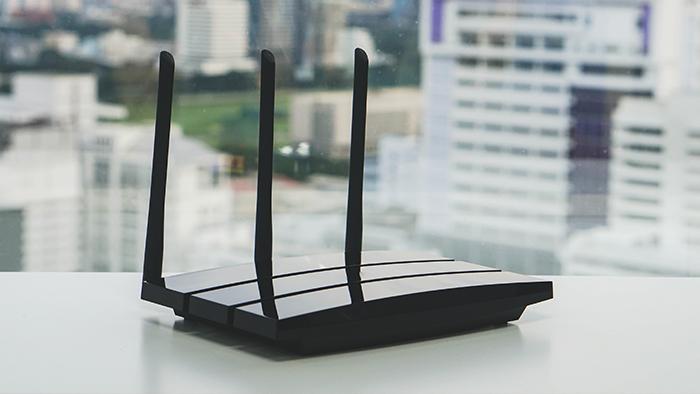
What a residential proxy actually is
A residential proxy is a home internet connection that a third party rents so it can browse websites without getting blocked.
If your device is enrolled in a residential proxy network, companies will be able to route their traffic through your home Wi-Fi to visit pages, and it will appear as if those visits came from you.
That lets organizations quickly load page after page without triggering suspicious traffic alerts or CAPTCHAs (those “click on the tiles with a traffic light” pictures that bots hate) to scrape the web for data.
Usually, services that enroll home devices into residential proxy networks use terms like bandwidth sharing or internet connection sharing when communicating with consumers. These terms may sound less technical, but our survey research indicates that people’s understanding of what they’re agreeing to is still hazy.
How well Americans understand residential proxies: 6 insights
-
Most people have never heard the term: According to our survey data, just over half of U.S. adults (53%) said they had never heard of a residential proxy before taking the survey. Another 9% weren't sure. Only 14% said they understood what one is and how it works. Another 13% said they had a basic idea, and another 11% had heard something but weren’t sure of the meaning.
-
Even fewer can define it: Of the 27% of people who claimed to at least have a basic idea of how residential proxies work, only about one-third (32%) chose correctly when presented with four substantive options. Adjusted to represent the whole population, that means just 9% of U.S. adults can correctly identify what a residential proxy does. The rest guessed it protects their privacy, speeds up their internet, or blocks malicious sites.
-
People are using them anyway: 29% of consumers said that at some point, they had installed an app offering rewards, money, or free features in exchange for sharing unused bandwidth. 17% of consumers use one currently. Among adults aged 35 to 44, 26% currently use a bandwidth sharing app.
-
The phrase “share your unused bandwidth” is only vaguely understood: When asked what they’d expect it to mean, 32% of consumers wouldn’t know what it meant at all. 29% thought it meant that the app may use part of their internet connection in the background, 25% thought that other people or companies might access websites through their home IP address, and 26% thought that their device could appear to websites as the source of someone else’s internet activity. Meanwhile 30% assumed it could affect their connection speed, data usage, or battery, and 33% thought it could create privacy or security risks. In reality, all these definitions and risks are true.
-
Concern is high once it's explained: After we described the arrangement plainly (that an app could be allowing third parties to route internet traffic through their home internet connection), 77% of respondents said they’d be very concerned or somewhat concerned. Just 5% weren't concerned, and 14% responded “it depends on how it’s used.” Among concerned respondents, the most alarming potential consequence of bandwidth sharing was their home IP addresses being associated with suspicious or illegal activity: 55% were concerned about this when asked.
-
Almost half of consumers are still open to bandwidth sharing, especially if apps are transparent about their intentions: Asked whether they’d install such an app for a small reward or free access, 20% said “yes, definitely,” and 27% said “Maybe, if the app were clear about what it does.” 53% said “no.” Among 25- to 34-year-olds, around two-thirds were at least open to it.
What are residential proxies used for?
Legitimate use cases for residential proxy services could include ad agencies confirming that their ad campaigns are showing up where they should, or market researchers comparing publicly available prices or competitor offerings across the web.
Another major use-case is web scraping and data collection, including by AI companies developing and improving LLMs: the so-called AI data race. AI companies need to collect large amounts of web data to help train models. Residential proxy networks can help them do this.
However, residential proxy networks can also be abused by bad actors. Residential proxy services could be used to make fraudulent or automated activity appear to come from ordinary home connections. That can help bad actors create fake accounts, snap up limited stock, or run phishing and other scams while making the activity harder for websites to detect.
Why residential proxies can be problematic
Since they make automated traffic appear to come from ordinary internet users, residential proxies can also be used for abusive, fraudulent, or simply questionable activities. For example, cybercriminals may use them for credential stuffing, where they cycle through real people’s IP addresses to test stolen username and password combinations without getting blocked.
Research on residential proxies conducted by Threat Researchers at Avast found 20.8 million attacks associated with residential proxy networks between January and mid-September 2026. The findings, published in a technical analysis, show that the same infrastructure used for legitimate web access can also be used in attacks against consumers.
In a 2026 PSA, the FBI describes residential proxies as a “standard tool criminals use,” warning consumers their Wi-Fi networks could be leveraged for malware distribution, hosting phishing infrastructure, creating fake social media accounts, bypassing content restriction, or hosting illegal marketplaces, among other misdeeds — and the consumer could be made to look responsible.
Methodology
Findings are based on an online survey of 1,000 U.S. adults conducted July 17–23, 2026 by Dynata on behalf of Gen Digital (the company behind Avast). Results are weighted to be nationally representative by age, gender, and region. Percentages are rounded and may not total 100.







/Public-vs-local-IP-addresses-Thumb.jpg)