- Security
- Privacy
- Performance
Keep getting calls from unknown numbers that don’t get named by your caller ID? Besides pesky marketers, criminals also use no caller ID numbers to run scams and steal personal data. Learn how to unmask private numbers and see who is calling you. Then, get a reliable cybersecurity tool to help prevent scams and keep your personal data private.






This Article Contains
This Article Contains
How to figure out a no caller ID number
Some of the best ways to uncover an unknown caller ID include using the *69 or *57 short code features, downloading a third-party app, contacting your phone service provider, or searching the number with no caller ID online.
If you receive a call or message from an unknown number, it’s often best not to answer — at least until you know who you’re dealing with. Unknown callers could be hiding their identity to try to scam you. If you do pick up, proceed with caution and don’t share any personal information to help prevent identity theft.
Here’s a more detailed summary of methods you can use to find an unknown caller’s phone number:
Use the *69 code to get no caller ID numbers
Dialing *69 in North America activates the last-call return service, which provides you with the previous caller’s number, assuming they haven’t blocked it. To find a no caller ID number with the *69 code, open your Phone app > Select Keypad > Dial *69 > Tap the Call button > Listen to the automated recording.

Depending on your phone service provider, *69 may offer a dial-back option to return calls and identify who called you. However, using this feature can expose you to potential scams, unwanted telemarketing, or malicious individuals who hide their identity, as dialing back confirms your number is active.
The *69 service is available through most phone service providers on both iPhones and Androids. It is usually free, although some providers may charge for last-call return services.
Dial the *57 code to trace unknown numbers
If you’re an AT&T landline customer, you can submit a no caller ID trace request by dialing *57, allowing your carrier to log the call details. This is a good option if an unknown number caller threatens or harasses you, or you suspect cybercrime activity, as the log can be used by law enforcement.
To trace a no caller ID number with the *57 code, simply open your Phone app > Select Keypad > Dial *57 > Tap the Call button > Follow the instructions. Keep in mind there may be a fee (cost varies depending on the provider), and you must dial the code immediately after the suspicious call. Learn more on the AT&T website.
Enable caller ID requests on Android
Android phones allow you to automatically request caller ID information from incoming calls, although this won’t unmask numbers that have no caller ID enabled. The steps may vary slightly on different Android models — look in the extended settings menu of your phone app for an option called Caller ID.
To enable caller ID on a Google Pixel phone:
-
Open the Phone app > Tap the three lines in the top-left corner > Caller ID and spam > Toggle on.
This built-in service can help you identify business calls and spam numbers that may not be in your saved contacts list. If the incoming caller's phone and carrier support this feature, their actual phone number will be revealed, helping you identify who’s on the other end.
Contact your service provider
If you find yourself consistently wanting to learn which no caller ID or unknown numbers are calling you, try contacting your service provider’s customer support team to ask about any call-tracing services they offer. These services usually come with a fee, so make sure you know what the costs are before you proceed.
Use a third-party app or service
Third-party no caller ID tracing apps can find an unknown number using a variety of methods, but usually they perform a reverse phone lookup. This entails scraping information from public databases, social media platforms, and other online sources to help identify an unknown number.
Before using a third-party app to trace no caller ID numbers, ensure the service you choose is safe and reputable. Scam apps posing as legit call-tracing services can compromise your security and privacy — always check the reviews and research the business or app name in a search engine.
Let’s take a look at some trusted no caller ID third-party apps and services:
MaskOff
MaskOff is an iOS and Android app that tracks and identifies no caller ID numbers from any unknown calls you decline. It works for all American carriers. Depending on your chosen plan, MaskOff can also record calls, which is helpful for gathering proof of harassment. The app has a three-day free trial followed by a monthly or weekly subscription fee.
TrapCall
TrapCall is an Android and iOS app that intercepts calls from unknown numbers and redirects them to its servers. It uses software analysis to reveal the caller’s identity. Other features let you block spammers, blacklist unwanted numbers, and transcribe voicemails into text. TrapCall is a premium service with a one-week free trial.
Spokeo
Spokeo is a people search website that collects data from online and offline sources. Its reverse lookup feature lets you look up unknown numbers and see the caller’s name, address, social media profiles, and more. It can help verify the identity of the person behind an unrecognized number, but it won’t reveal a number hidden by caller ID blocking. You can usually get a free report, but membership is required for the full service.
Truecaller
Truecaller helps you identify the name or business identity of an unknown caller by matching it to a crowdsourced directory of phone numbers and caller information. The app also blocks incoming calls from numbers known to be used by scammers or spammers. Truecaller is free, although additional features and an ad-free experience are available for a membership fee.
BeenVerified
BeenVerified is an online background-check service that lets you verify people and businesses. Its extensive sources are compiled from public and private databases. If you search the phone number of an unknown caller, you may find their name, address, social media profiles, and other information. This is a premium subscription fee — free trials are sometimes available.
Intelius
Intelius provides a robust reverse phone lookup tool that allows users to search for information about unknown callers. With a membership, you can enter a phone number to find details like the caller's name, address, and other associated information. The site won't disclose numbers that are hidden through caller ID blocking.
Hiya
Hiya is a powerful call management app that identifies and blocks unwanted callers. It offers auto-blocking for spam and scam calls, as well as reverse phone lookup capabilities. Some features are free, but premium versions offer enhanced spam protection and access to a database of up to 1.5 million caller identities.
Whoscall
Whoscall is a freemium mobile app that provides caller identification services, helping users to check private numbers and block spam calls. Key features include real-time caller ID, nuisance call blocking, manual number lookup, and a community reporting system. It also offers offline capabilities for identifying no caller ID calls.
Use a search engine or social media
If you receive a call from a number you don’t recognize (but that isn’t obscured altogether), you can try using a search engine like Google or Bing to get more information by searching the phone number in quotes (e.g., "123-456-7890").
This can help reveal whether it’s a known spam caller or highlight public listings or business profiles associated with the number. You can also search for information about numbers using AI tools, like ChatGPT, but make sure to check any provided sources for accuracy.
Additionally, you can search for the number on social media platforms, such as Twitter, LinkedIn, or public Facebook pages — some users add a phone number to their profiles, which may help you uncover the caller's identity.
Can you reveal no caller ID on iPhone?
There is no built-in iPhone setting that allows you to reveal no caller ID numbers, although you can filter unknown callers, having their incoming calls be sent straight to voicemail, for example. To find the identity of an unknown caller on iPhone, your best options are to use third-party apps and services or dial *69 to activate the last call return service.
Filter unknown callers
iPhones give you the option to filter unknown callers so that they go straight to voicemail: go to Settings > Apps > Phone > Turn on Unknown Callers (under Call Filtering.)
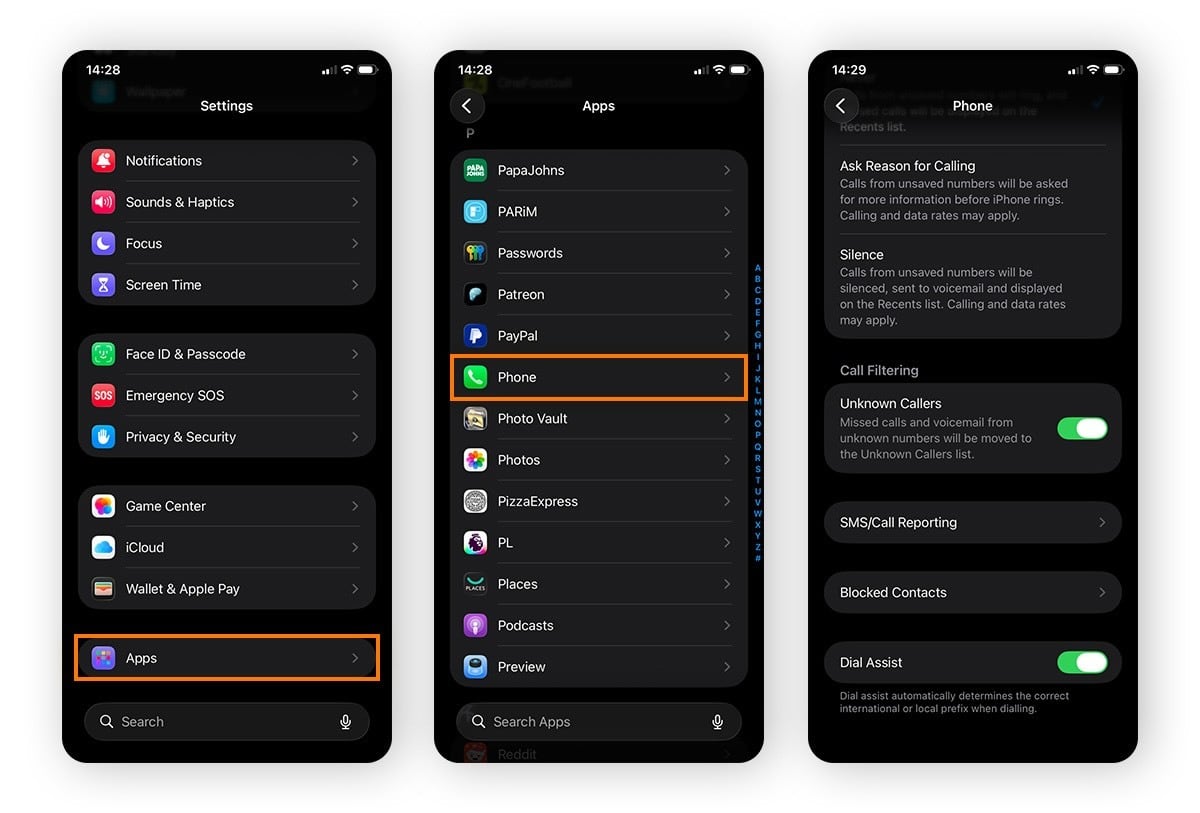
Any missed calls from unknown numbers will now be moved to your Unknown Callers list. You can view these calls in the Phone app: Go to the Recents (or Calls) tab > Tap the Filter button (top-right corner) > Select Unknown Callers.
Unknown caller vs no caller ID: What's the difference?
All callers whose number you cannot see are classified as unknown callers, while no caller ID refers to calls where the caller deliberately hides their phone number.
Here’s a more detailed definition of the difference:
-
Unknown caller: This occurs when your phone service provider can't identify the caller, or your device has issues displaying the caller ID. This could be due to name lookup problems, network issues, and formatting inconsistencies (e.g., for international calls.)
-
No caller ID: This indicates that the caller has intentionally hidden their phone number. It is often used for privacy or anonymity by individuals or organizations, but it can also be employed by scammers to conceal their identities.
Both unknown and no caller ID calls can come from a variety of sources, including telemarketers spreading spam, scammers perpetrating tech support scams or other fraudulent schemes, or legitimate callers who are trying to hide their number for privacy reasons.
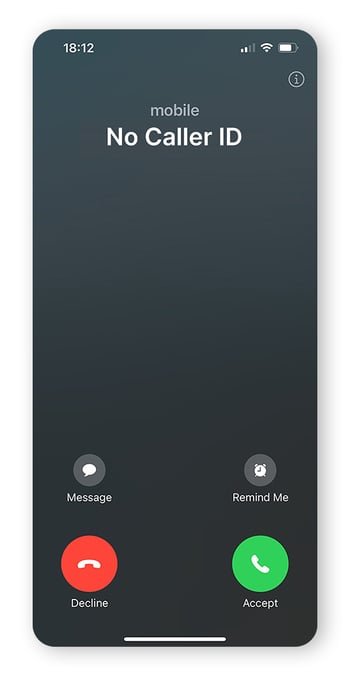 What a No Caller ID call looks like
How does no caller ID work?
No caller ID may appear when a caller deliberately masks their phone number using a carrier service, pre-dial short code, third-party app, or caller ID spoofing. Here’s some more information about these techniques.
-
Caller ID blocking: Many phone service providers give customers the option to block their identity from call recipients, typically enabled within the phone settings.
-
Pre-dial code: On some networks, inputting a short code like *67 before dialing a number can block the caller ID from being displayed.
-
Third-party apps: Some apps claim to offer the ability to hide a phone number or display virtual, alternative, or one-time phone numbers.
-
Spoofing: Scammers may block their real identity by pretending to be a legitimate organization — often using VoIP (Voice over Internet Protocol) technology to deliberately transmit false information to recipients' caller ID systems.
How do I call a no caller ID back?
The easiest way to call back an unknown caller is to use your carrier’s dial-back service, if available, via the *69 dialing code. Alternatively, you can try contacting your carrier to see if they can find the number, or look for a safe third-party app that can help you identify the caller.
Calling back a no caller ID number can be risky, so think carefully before returning a call and be prepared to hang up straight away if anything seems suspicious. If you think the call is from a legitimate company, use official channels to verify the number.
Here are some reasons why it’s generally not advised to return calls from unknown callers:
-
You are confirming your number is active, which may increase your risk of more spam calls, scams, or harassment.
-
You may incur an automatic charge if the call redirects to an international number, for example.
-
The person or business you think you’re calling may actually be a scammer who will try to trick you into sending money or sharing sensitive information.
How to block no caller ID calls
If you can’t find the unknown or no caller ID numbers that are calling you, but want to stop receiving the calls, there are a few options. You can block or filter calls from private numbers by using your phone's built-in settings, requesting call blocking from your phone service provider, or using a third-party call-blocking application. Here’s some more information on each method.
Silence or block unknown callers
Many phones allow you to block unknown callers or direct them straight to voicemail using an option in the system settings. This feature is useful for restricting the calls you get notified about to those from known contacts, helping you avoid unwanted interruptions and potential scams.
Keep in mind that blocking calls doesn’t also stop spam text messages automatically. If you’re in the US and get an unwanted text, forward it to 7726 (SPAM) to help your carrier identify spam messages.
Silence unknown callers on iPhone
Open Settings > Apps > Phone > Tap Silence (in the Screen Unknown Callers section) so a blue tick appears.

The Silence Unknown Callers feature on iPhone can be effective for reducing spam calls, but may lead to voicemail clutter or missed or delayed communication from legitimate numbers not saved in your contacts.
Block unknown numbers on Android
Open the Phone app > Tap the three-dot menu icon > Settings > Blocked numbers > Toggle on Block calls from unknown numbers.
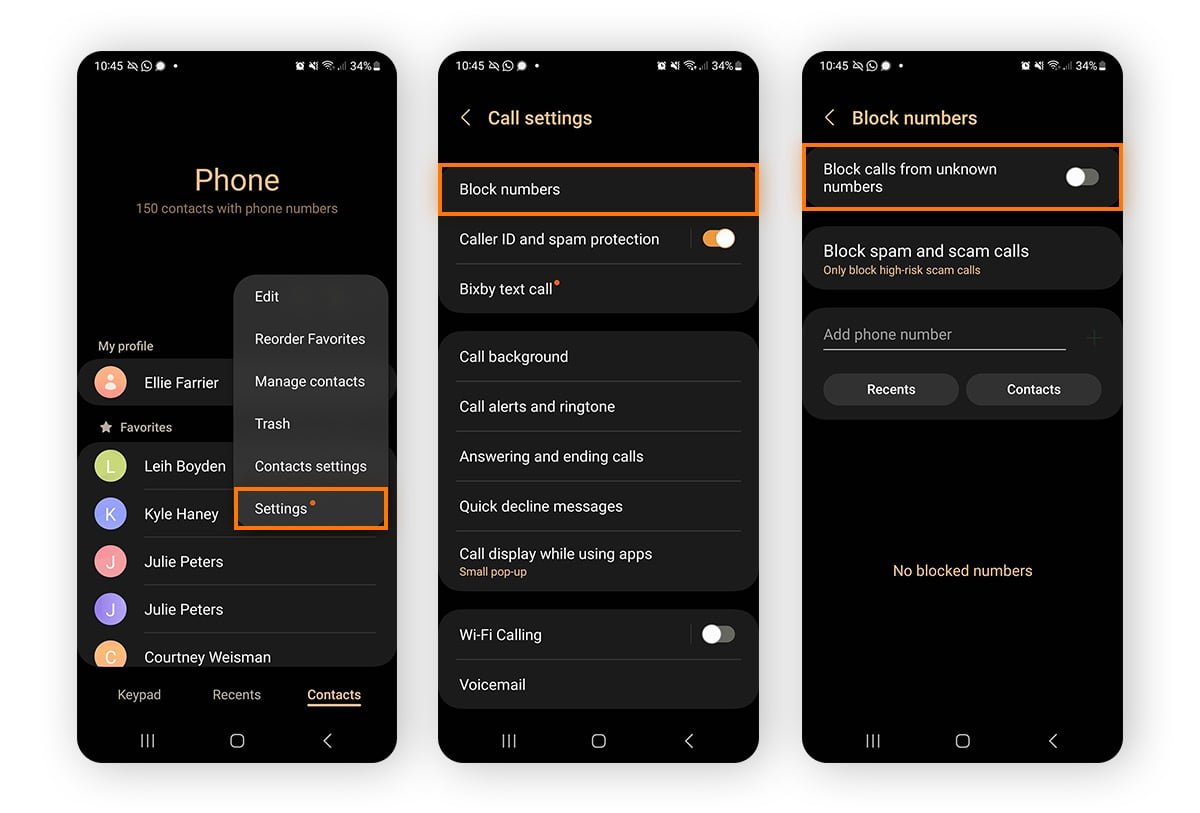 The exact steps to silence unknown callers on an Android depend on your model and OS version. However, the feature is typically in the main settings app under the phone option, and should be labelled Block calls from unidentified numbers, or similar.
Enabling Android's call-blocking feature will block calls from no caller ID numbers. However, it may also prevent important calls from reaching you if they come from callers with unknown numbers.
Use call screening
Call screening is available on iPhones (with iOS 26 or newer) and some Android devices. It works by identifying who the caller is and what their reasons are for contacting you before you answer the call — you get a transcript of the caller's response and can decide whether or not to answer.
It’s especially useful for helping weed out scammers and telemarketers.
On iPhone
Open Settings > Apps > Phone > Tap Ask Reason for Calling (in the Screen Unknown Callers section.) A blue tick will appear next to it.

On Android
Call screening features are available on many Android devices, including Google Pixel (3 and newer) and Samsung Galaxy (with One UI 5.1 or newer) phones. However, the exact steps to enable the feature will differ depending on your device.
Here’s how to activate call screening on a Google Pixel, as an example:
-
Open the Phone app > Tap the three-line menu (top-left corner) > Settings > Call Screen > Toggle on Automatically screen calls.
-
Choose your protection level:
-
Maximum protection: screens unknown numbers and declines spam.
-
Medium protection: screens suspicious calls and declines spam.
-
Basic protection: declines only known spam.
 Google Pixel uses an AI assistant to screen calls without your input. If, after the person calling declares who they are and why they are calling, the call assistant determines it to be spam, it will automatically decline the call.
Samsung Galaxy has a similar call screening feature, called Bixby Text Call (BTC), but you need to type in or select responses for the voice assistant to read out.
To turn on BTC on your Samsung Galaxy, open the Phone app > Tap the three-dot menu > Settings > Bixby Text Call > Toggle the feature on. You can set questions or answers via Customize Language & Voice > Quick Responses.
Enable spam filtering
Enabling spam filters on your device is a good option for blocking calls from unknown caller IDs before your phone even rings. You can choose from call filtering options in settings on both iPhones and Android devices:
-
On iPhone: Open the Settings app > Apps > Phone > Call Filtering > Turn on Unknown Callers (under Call Filtering.)
-
On Android: Open the Phone app > Tap the three-dot menu icon > More > Settings > Caller ID and spam > toggle on See caller & spam ID and Filter spam calls.
If you have a Google Pixel with AI-assisted call screening, the Filter spam calls option will not be available.
Request call blocking from your phone provider
Your phone carrier may have spam or unknown caller blocking features that can be enabled on the network level, helping protect you from calls you don’t want to receive. To find out, contact them and ask about their Do Not Call list or telemarketer blocking options, and request to activate these services on your account.
While this can help reduce unwanted calls from telemarketers, be aware that it may not fully protect you from scam or spam calls. And bear in mind that there may be a fee attached, so ask for a cost breakdown before committing.
Use an unknown call blocker
Apps designed for call blocking, such as Truecaller and Hiya, can automatically identify and block suspicious calls, often providing stronger protection than built-in phone features. If you choose an app-based solution, check independent reviews and carefully review app permissions before installing to ensure it doesn’t request unnecessary access to your data.
When you’ve installed your chosen app, you’ll be able to configure it to block the types of calls you don’t want to receive. Here’s an example of what the setup process often looks like, using the Truecaller app on an iPhone:
-
Download, install, and launch the app.
-
Tap Get Started and follow the prompts to create an account. You will be required to enter and verify your phone number via SMS or a call.
-
Go to your iPhone Settings > Tap Phone > Call Blocking & Identification > Toggle on Truecaller.
-
Return to the Truecaller app > Toggle on Hidden numbers in the Advanced Blocking section.
-
You can also manually block numbers:
-
Tap Calls > Select the number you wish to block > Tap the Block icon.
-
Tap Phone numbers (in the Add to my block list section) > Enter the number you want to block. You can also block numbers based on names, sender IDs, and country codes, among other options.
To help maintain effective call blocking, always keep the call blocker app software updated, review settings, and periodically update your block lists.
Why do I keep getting calls from unknown numbers?
You may be receiving calls from unknown numbers or spam callers because your details were leaked in a data breach, there are technical issues with your phone service provider, or you’re being targeted by telemarketers or scammers.
Here’s a more detailed look at some of the factors that can lead to you receiving more calls from unknown numbers:
-
Data breach: Your phone number may have been exposed in a data breach suffered by a company or service you've used in the past.
-
Public directories: Public directory listings or social media profiles can make your number easily accessible to telemarketers.
-
Data brokers: You may have filled out an online form or signed up for free trials or loyalty programs using your phone number, which was then sold to third-party data brokers.
-
Doxxing: Someone may have doxxed you (exposed your personal information without your permission online), potentially leaving your details visible on the dark web.
-
Autodial systems: Spam callers use bots to dial numbers sequentially, meaning you could be targeted purely by chance. Engaging with these callers will increase the likelihood of future calls because it lets the spammers know that your number is active.
-
Spoofed calls: You may have answered a spam or scam call in the past, confirming to the callers that your number is active and encouraging them to call you again.
-
Social engineering: You could have fallen victim to a social engineering attack, such as a phishing scam, that led you to share your phone number with scammers.
Report scam calls to the FTC
The Federal Trade Commission (FTC) is an independent US government agency that can investigate nuisance callers and take action against scammers reported to them — even if the caller used an unknown caller ID.
To report a scam to the FTC, go to the FTC’s fraud report page > Select Report Now > Fill out the form with as many details as you can provide > and click Submit.
Reporting scams to the FTC — or your local equivalent if you live outside the US — helps them build up an in-depth picture of the scam landscape, find patterns and trends, and develop strategies for stopping future scams before they occur.
Protect your phone from malicious threats
All the personal data stored on your phone can make it a tempting target for cybercriminals, scammers, and snoops. That’s why using a robust online privacy and security tool is so important — it can help protect you against online threats resulting from phone scams.
Powered by an award-winning threat detection engine and an AI scam assistant, Avast One protects your device with a powerful array of tools. Get real-time protection against malware, suspicious links and downloads, and dangerous websites. Install Avast for free today and start protecting your digital life right now.
What customers say

More Security Articles
Is ChatGPT Safe?

Is BlueStacks safe?

What Is Riskware and How to Avoid It

Is Roblox Safe for Kids?
Juice Jacking: What It Is and How to Protect Your Devices

What Is Hugging Face?
What Can Scammers Do With Your Number and How Can You Help Protect It?
What Is CAPTCHA and How Does It Work?

What Is DNS Poisoning and How to Protect Your Data

What Is a Swatting Incident and How Does Swatting Work?

How to Keep Kids Safe Online

Has My Twitter Account Been Hacked?
Other Threats
Security
Deepan Ghimiray
27-04-2023