- Security
- Privacy
- Performance
Cash App is a widely-used digital payment app that lets users send and receive money, invest, apply for loans, and manage other financial services. However, unlike credit card transactions, most Cash App payments are processed instantly and can be difficult to reverse. This means that sending money to the wrong person — or to a scammer — could result in a permanent loss of funds.




This Article Contains
This Article Contains
Is Cash App safe to use?
Cash App is generally safe for everyday use, especially for sending money to friends, family, or other people you know and trust. However, it carries more risk than traditional payment methods because most transactions are instant and difficult to reverse, buyer protections are limited, and scammers often target user mistakes rather than the app itself.
In many cases, staying safe on Cash App depends on who you send money to and how carefully you use the platform to avoid falling for Cash App scams.
How to avoid Cash App scams
The best ways to avoid Cash App scams are to use the app cautiously, recognize common scam tactics, and act carefully whenever something seems suspicious. Because most Cash App payments are processed instantly and difficult to reverse, even a small mistake can be costly.
Like Venmo, Zelle, and other payment apps, Cash App is generally safe for transactions with trusted individuals. But unlike debit card transactions, P2P payments lack robust fraud protections, which makes falling for Cash App scams particularly dangerous.
It’s important to remember that Cash App will never ask for your PIN, sign-in code, or require you to send money to “verify” your account. Any email, text message, phone call, or direct message requesting this information is almost certainly a scam.
Here are some guiding principles to help you steer clear of Cash App scams:
Don't exchange payments with a random person
Cash App is safe for splitting bills and paying for one-time services or even large transactions for people you know personally. Any transactions with those you don’t know personally leave you open to manipulation. When dealing with businesses, make sure to double-check for typos, alternate spellings, or letter-swapping tricks (such as using an upper-case “i” instead of a lower-case “L”).
Don’t share your personal details online
Be careful what you share online, especially when it’s not on a private account. A scammer doesn’t need a lot to send you a convincing fake email, SMS, or DM, then move the scam to Cash App. Any online personal details can also be gathered to scam you in the future, or they can be sold to data brokers.
And never share your Cash App PIN or any other account details online, even if you receive an official-looking email or message. Cash App will never ask you for your PIN or sign-in code.
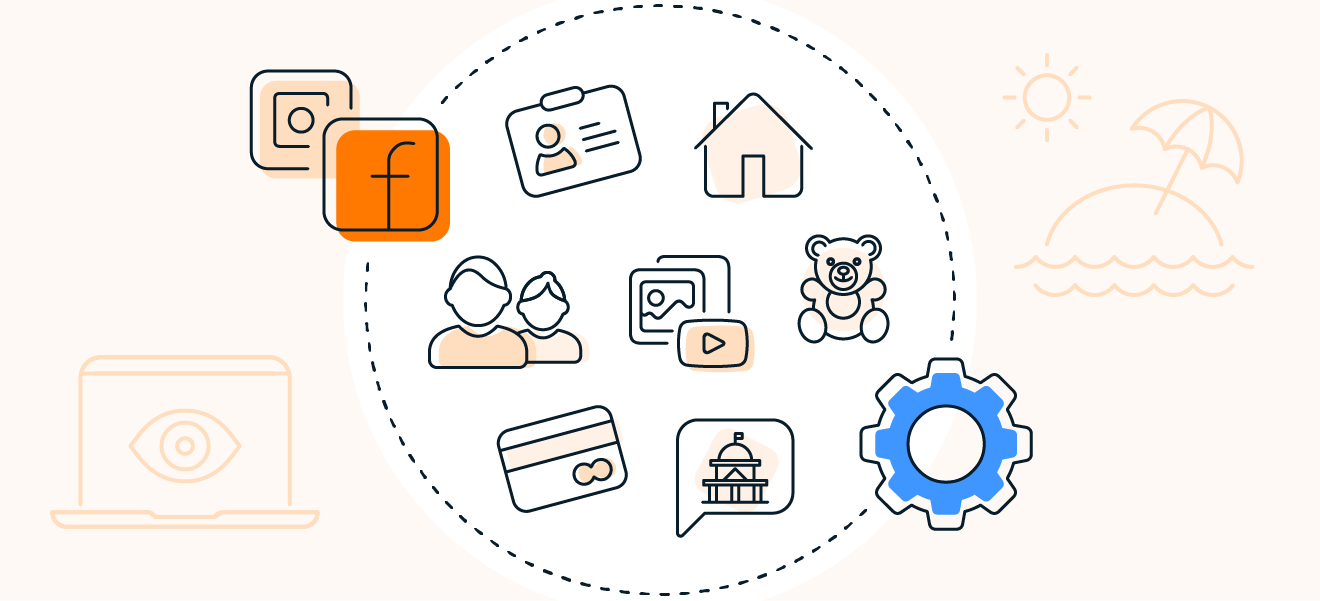 Don’t give out personal information to strangers. Use privacy settings on all your accounts to help protect you from Cash App scammers.
Review your bank account statement regularly
Check your bank account and Cash App transactions regularly for any suspicious activity. Review your credit report occasionally for discrepancies, too.
If you suspect identity theft, set up a fraud alert on your credit report to put the relevant agencies on notice. Then use a free tool like Avast Hack Check, which is included with our private browser, to see if any of your passwords have been exposed in a data breach. If compromised, update your passwords immediately to protect your accounts.
Avast Secure Browser also allows you to browse, chat, and shop securely online without constantly worrying about digital threats. It’s like an invisible shield — it hides everything you type online, protecting sensitive data like passwords and credit card numbers.
Don’t click suspicious links
Cash App scams often involve links to unsecured websites made to look legit. Or they can lead to malware that steals data and spies on you. Clicking suspicious links can drain your wallet, damage your device, or send you to the dark corners of the internet. Our website safety check guide can teach you the warning signs to watch out for.
Use strong, unique passwords
If you use the same password for multiple accounts, and scammers get their hands on it, they could use it against you in a Cash App scam, a Venmo scam, or another type of financial fraud.
Always create strong, unique passwords for all your accounts. Weak passwords consist of anything that can be found online about you, including your distant past. Use one of the best password managers to help keep all your passwords safe.
Use two-factor authentication
Two-factor authentication (2FA) requires two forms of verification before letting you into an account. If it’s not set up on your Cash App account, make sure you use it. Cash App will help keep you secure by sending you a one-time password every time you sign in.
Biometric data and using facial recognition technology like Apple’s Face ID can also help secure your phone and accounts. There are also dedicated verification apps you can use like Google Authenticator.
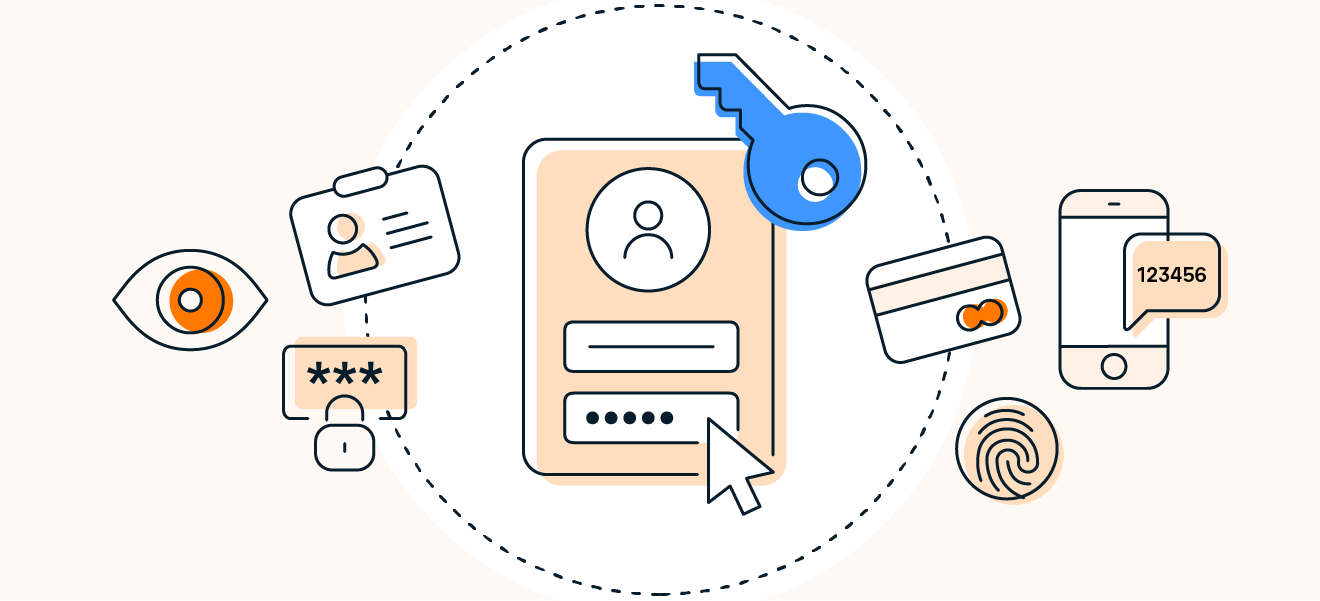 Use two-factor authentication (2FA) to keep your online accounts more secure.
Turn on alert settings
You can turn on notifications for all Cash App transactions to track account activity wherever you are. If someone is trying to access your funds, you’ll know right away. To activate notifications, open Cash App > tap your profile icon > Notifications and select which ones you would like to activate.
Popular Cash App scams
Popular Cash App scams include fake refunds, screenshot scams, and phishing. Most Cash App scammers use social engineering to trick their targets into giving up sensitive details or performing unsafe actions.
1. Impersonating customer support
Similar to tech support scams, scammers could contact you via phone, text message, DM, or email, pretending to work for Cash App. They’ll try to get your Cash App passcode and one-time password to gain access to your account.
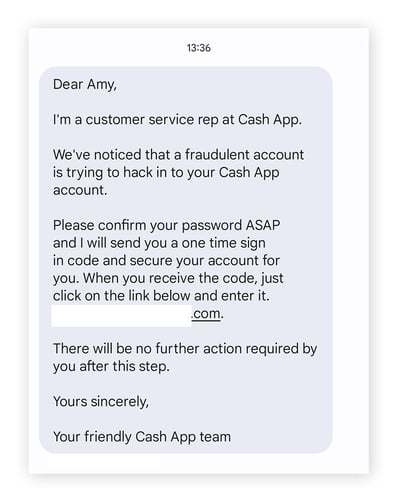
Customer support scammers can be convincing because they often spoof the Cash App number or name. Communicate with Cash App only through the app itself, by calling the number from their official website, or using the official Cash App support site.
2. Selling expensive items
Cash App offers business accounts for small businesses to sell goods and services. Scammers may open a fake Cash App account and get you to pay for a great “deal” on a desirable item, such as concert tickets or rare collectibles. Then, after you pay, they’ll stop responding.
Cash App scammers often use high-value expenses like rental deposits to lure victims. They create fake property listings with enticing prices and pressure you to send a deposit via Cash App — then disappear. While a low price isn’t always a scam, always visit the property in person and use a more secure payment method like a bank transfer.
To stay safe from Cash App business account scams, make purchases only from established retailers or those you know personally.
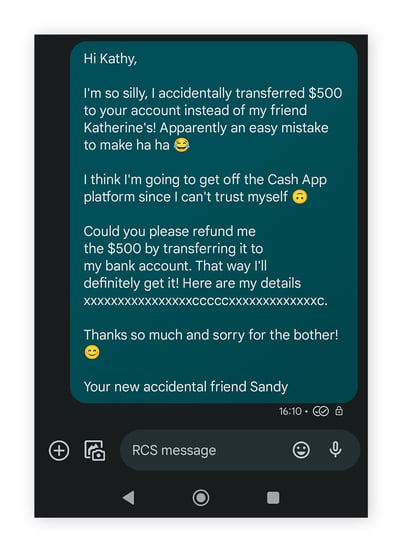
3. Accidental transfers
One common Cash App scam involves “accidental” payments that follow a predictable pattern:
-
A scammer sends you money, often using a stolen card or hacked account.
-
They quickly contact you and ask for the money to be returned.
-
You return the funds to a different account controlled by the scammer.
-
The original payment is later reversed by the other victim’s bank as fraudulent.
-
You lose the money you sent, which remains with the scammer.
If you receive money from a stranger, avoid sending it back directly. Instead, report the transaction through Cash App and contact support if needed.
4. Bitcoin and other cryptocurrency schemes
Cryptocurrency is a common target of Cash App scams since it’s largely anonymous and nearly impossible to recover. And since Bitcoin is arguably the most well-known cryptocurrency, Bitcoin scams are especially common, with fraudsters promising huge returns for a small investment — only for victims to lose all their money. Crypto scammers also use hacked social media accounts to trick friends into sending crypto before the fraud is detected.
5. Cash flipping
Cash flipping scams, also known as money circle scams, are a cybercrime version of real-world pyramid schemes. The scheme may promise to double or quadruple your money by investing it in the stock market through a friend or professional contact. But just like pyramid schemes, they’re designed to scam people out of their money.
Cash App users can be targeted directly on Cash App, on a social media platform, or by SMS. Scammers sometimes post details of these money-making schemes on social media and wait for interested people to take the bait. They then ask them to send money through Cash App.
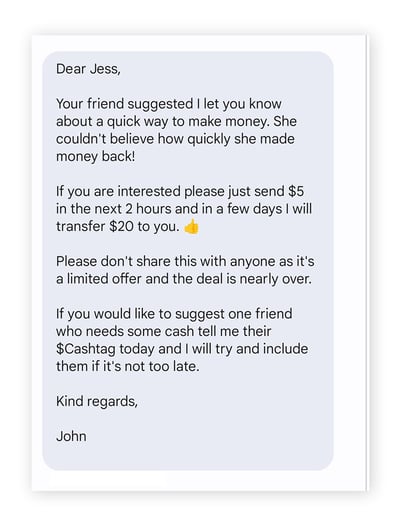
6. Cash App Friday Scams
Cash App previously ran a #CashAppFriday promotion that went viral on Twitter and Instagram, where anyone who followed or commented with their $Cashtag was entered in a cash giveaway. Scammers have exploited its popularity to run fake Cash App Friday promotions. Everyone who enters the “contest” is messaged saying they’ve won — they just have to pay a fee or enter banking details to claim their “prize.”
Cash App has since shied away from Cash App Fridays, but the company often runs similar promotions with gift cards, Bitcoin, and other prizes. If you want to know if a Cash App giveaway is real, confirm it’s a verified Cash App account first, and never pay someone a fee to receive money.
7. Phishing, vishing and smishing
Phishing is how scammers get you to give up your details or click dangerous links in a fake email, while vishing works through voice calls and smishing through SMS. There are also platform-specific scams such as Apple ID phishing scams.
These Cash App scams involve scammers impersonating authority figures, businesses, colleagues, and the like. The aim is to trick you into handing over sensitive info, such as your login details, or opening links that trick you into doing the same.
A common Cash App phishing scam involves fake surveys. Scammers pose as legitimate companies, offering rewards for completing a survey. But before you can begin, they request sensitive information like your Social Security number or an upfront payment, which legitimate surveys will never do. Learn how to identify fake texts to help avoid a sham giveaway.
 Cash App scammers can impersonate a trusted organization via the phone, email, or text.
8. Romance scams
Romance scams come in many forms, but the premise is always the same: hook lonely or desperate people into sending money in exchange for a love that will never be. A romance scammer typically scouts a target before making their move.
Catfishers use a fake online persona and pretend to be a potential mate for their victim. They dangle the prospect of meeting in person, but a problem always comes up that supposedly only a Cash App transfer or payment can fix, such as money to buy a plane ticket. Romance scammers will drain their dupes as much as possible before cutting them loose.
9. Screenshot scam
Cash App screenshot scams are when Cash App scammers send fake screenshots “proving” that a payment is pending, an investment you made has turned into big money, that you’ve won a prize, or some other alleged win. They will then ask you to send them money back for some reason, such as claiming that the total they “sent” you was incorrect.
In a version of gift card scams, they might ask you to refund them through gift cards instead of Cash App. When requesting money, Cash App scammers sometimes ask you for a screenshot of your payment as well. This screenshot could then be used as “proof of payment” for other people the scammer is scamming.
10. Government scams
Another form of Cash App fraud involves scammers impersonating the government, claiming to send you a tax refund, relief, or other stipends. They may ask for your Social Security number or Cash App details to "process" the payment, or they might demand you pay a fee via Cash App before releasing the funds.
No government agency will ever contact you through Cash App, or ask you to send money through a payment app. Communicate with government agencies only through official channels.
Can you get scammed by receiving money on Cash App?
Simply receiving money on Cash App does not give someone access to your account or automatically compromise it. However, unexpected payments can still be part of a scam.
One common tactic is the “accidental payment” scam, where a fraudster sends money and then pressures the recipient to send it back manually. In some cases, the original payment may later be reversed if it came from a stolen card or compromised account, leaving the victim out the money they returned.
If you receive money from someone you don’t recognize:
-
Don’t send the money back yourself.
-
Don’t communicate with the sender.
-
Report the transaction through Cash App instead.
-
Let Cash App handle any reversal or dispute process.
How to recognize a Cash App scam: warning signs and red flags
As well as being clued up about specific Cash App scams, it helps to understand the common warning signs many of them share. While scams can take different forms, they often rely on the same tactics: urgency, impersonation, and pressure to send money quickly.
Here are some common Cash App scam red flags to watch for:
-
Unsolicited messages or payments from people you don’t know.
-
Urgent or threatening language, such as “Act now or your account will be locked.”
-
Too-good-to-be-true offers, including “free money,” giveaways, or guaranteed investment returns.
-
Requests for sensitive information, like your PIN, login code, debit card details, or Social Security number.
-
Suspicious or mismatched $Cashtags that imitate real people, brands, or support accounts.
-
Screenshots or emailed “proof” of payment instead of confirmation directly inside the Cash App app.
-
Requests to send money upfront in exchange for a prize, payment, or service later.
If you notice one or more of these warning signs, stop and verify the situation before taking any action. Avoid sending money, sharing personal information, or clicking links until you can confirm the request is legitimate through official channels.
I think I've been scammed, what do I do?
If you think you've been scammed on Cash App, contact Cash App support and report the transaction immediately. Then, change your account details, including your PIN. For further protection, contact your bank or credit card provider, and file a fraud report with the authorities.
Report and block the account
To report a scam to Cash App, call their support line at 1-800-969-1940 or start a chat via the app.
Here’s how to block a Cash App account:
-
Tap the Activity tab on the home screen.
-
Tap the scammer’s name.
-
Tap Block at the bottom of their profile.
Change your Cash App account details
If you think a scammer has any of your details, immediately change your login information and PIN. Add 2FA settings if you haven’t done so. Also, consider transferring your balance to your bank account.
Contact your bank
If you can prove Cash App fraud took place, your bank may be able to recover the funds. However, most banks don’t cover Cash App or other money apps in their policies, and even if they do, getting proof of a crime can be difficult.
Contact the Federal Trade Commission
You can report a mobile payment app scam to the FTC if you think you’ve been a victim of a Cash App crime. You should always report any internet scam you come across to help stop others from being scammed.
Will Cash App refund money if I'm scammed?
There’s no guarantee you’ll recover your money if you’re scammed on Cash App. The platform may be able to cancel a transaction if you notify them immediately, but since payments are designed to be fast and, therefore, difficult to reverse, transactions are often final once the funds reach another account.
Unless you’re dealing with friends and family, it’s best to send money through secure channels with advanced security features. In any case, you should use one of the best secure browsers for extra privacy whether you’re using Cash App, shopping online, or sending any other secure information online.
Shop and bank securely with Avast Secure Browser
Help keep your financial transactions safe with Avast Secure Browser and benefit from advanced security features designed to shield your passwords, personal info, and banking details. Activate Bank Mode with one click for extra protection, and let our built-in anti-phishing technology automatically block harmful websites and downloads. Download it now for secure, stress-free online banking and shopping.
What customers say

More Security Articles

How To Work With Your Grandparents To Keep Them Safe From Scams

Grindr Scams: How to Spot Sextortion and Stay Safe

Brushing Scams: What Are They and How Do They Work?

What is the Nigerian Prince scam?

Block Mobile Scams Instantly with AI-Powered Scam Guardian Pro

How to Avoid eBay Scams: A Comprehensive Guide
How to Spot and Avoid Fake Emails Supposedly from Avast

Is Ticketmaster Legit?
Scam Likely Calls: What Are They and How Can You Block Them
Signal App Scams: How to Identify Them and Protect Yourself

How to Spot and Avoid Airbnb Scams

Facebook Marketplace Scams & How to Avoid Them
Scams
Security
Domenic Molinaro
3-11-2023